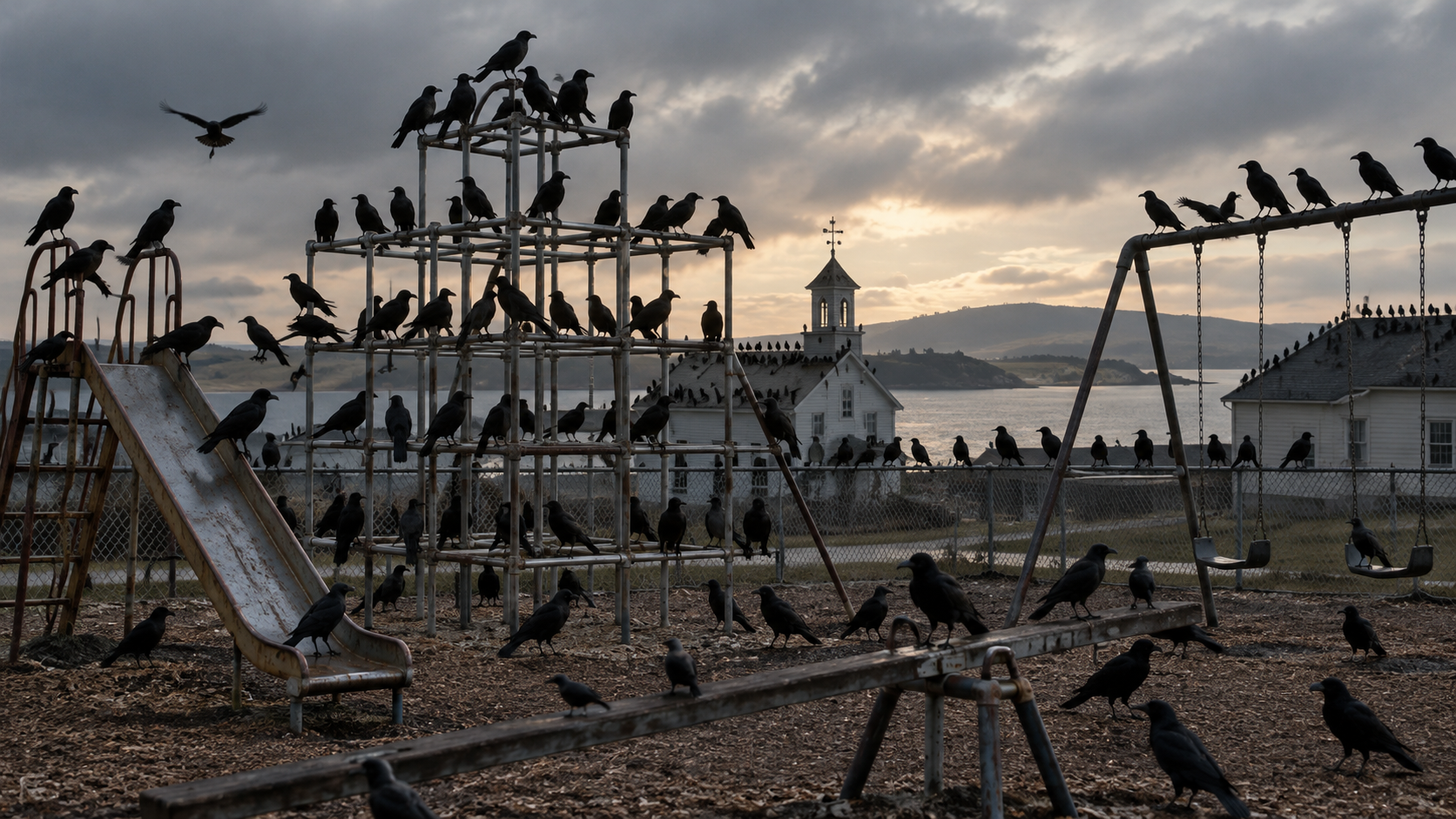
I was channel surfing the other evening when I happened upon Alfred Hitchcock’s The Birds, a terrifying movie about a coastal California town, Bodega Bay, besieged by their bird population.
There goes getting to bed early.
The birds organize, attack, and kill without apparent provocation, standing down just as suddenly. The movie ends without knowledge of what comes next as people vacate the town, as the birds watch.
What I love about running into movies I saw as a kid is that I get to rewatch them through adult eyes. When I was younger, the most frightening thing about the movie was the suddenness of it all.
There was no warning.
No precursor.
Then it dawned on me. It wasn’t the suddenness of it all.
It was the mass.
A bird is harmless. Thousands of birds are terrifying.
Moviegoers wouldn’t have flocked to the theaters to see The Bird.

But what scares me most as an adult is that I’ve seen it happen repeatedly.
It’s how organizations operate.
It’s how society operates.
Hell, it’s how we operate.
And then another movie came to mind.
In Men in Black, Agent K (a deadpan Tommy Lee Jones) explains to prospective recruit James Darrell Edwards III (Will Smith at his most cocky) why the fact that aliens are living on Earth is hidden from the general population.
After all, James argues, people are smart enough to handle it.
“A person is smart. People are dumb, panicky, dangerous animals, and you know it,” counters K.
Then, I started thinking about organizations and came to a conclusion.
Agent K is correct.
Maybe the scariest thing about the Birds is that we are never privy to the catalyst that led to their uprising.
And that’s not uncommon.
As a leader, I’ve had to navigate, and sometimes even execute, wide-scale terminations.
Oh, sorry, reductions in force.
Or even more innocuously, a RIF.
I remember some years back, I had to administer a RIF, an ever-more-common reaction when a corporation is provoked by some dimension of the economy, regulatory change, mergers, acquisitions, competitors, or even some senior leader reading the wrong article.
So the birds gather.
People are told that it’s nothing personal. In fact, there won’t even be an individual who claims it was their idea.
It’s the algorithm, after all. A construct so fair that you’ll have to take our word for it.
I know this to be true as I had to let go two senior leaders from the same critical area, losing valuable history while gaining risk. The only input I had was complaining. The department next to mine let go two top performers who happened to sit next to someone on a performance improvement plan.
That didn’t sit well with the team, who continued to carry the poor performer while now having to absorb the work of the two top performers.
Believe me, they complained.
It’s not personal, we were once again assured.
The algorithm made the selection. The how and why were every bit as mysterious as the catalyst that pissed off the birds.
You see, a singular bird had to have been the first to attack, but you’ll never know which as the flock provides anonymity.
The citizens of Bodega Bay could ask, I guess, I mean other than the fact that birds can only speak through their actions.
Same as the algorithm, albeit with more feathers.
When we were growing up, our teachers instructed us to never use passive voice. Show that the subject of the sentence performs the action. “I hit the ball.” Not “The ball was hit.”
Simpler times.
“Reductions were necessary,” we’re told.
Individual accountability diffuses into the flock, with the decision makers ensuring that the messengers are well equipped with the right things to say.
Even AI needs a prompt.
We’re seeing this play out as Major League Baseball approaches the December expiration of its collective bargaining agreement.
It seems that the billionaire owners are a little chafed by the salaries paid to millionaire players, and want a salary cap, even though they are responsible for the explosion of pay. For their part, the players believe in a strict meritocracy, cash ceilings be damned.
They have mouths to feed too, so we’re told.
The owners are overwhelmingly united on this front.
And they flock, united in cause.
The players’ union also is overwhelmingly united on this front.
And they flock, united in cause.
And the fans?
We just get increasingly nervous that our national pastime is at risk.
Earlier this season, Major League Baseball reported a 44% increase in viewership for nationally televised games compared with the same period last year.
Baseball loves their stats.
But the owners have to “save” baseball from crazy high salaries making it impossible for teams with small payrolls to compete.
Except for, of course, the Milwaukee Brewers and Tampa Bay Rays, possessors of two of the lowest payrolls in baseball (with the best records in their respective leagues), currently playing in the World Series.
Well, maybe not all stats.
Who are the owners saving baseball from? Ironically, themselves. The players get the contracts. They don’t write them.
The players will tell you their families have to eat.
Caviar apparently.
As for the fans?
Both flocks will tell you it’s nothing personal, but the game must be saved.
What is personal is the fact that we’re no better.
We may not have algorithms or collective bargaining, but we definitely have the desire to flock, abdicating our individuality to the altar of “Everyone’s doing it.”
After all, Beanie Babies were once thought to be shrewd investment opportunities.
What are you laughing at, NFT owners?
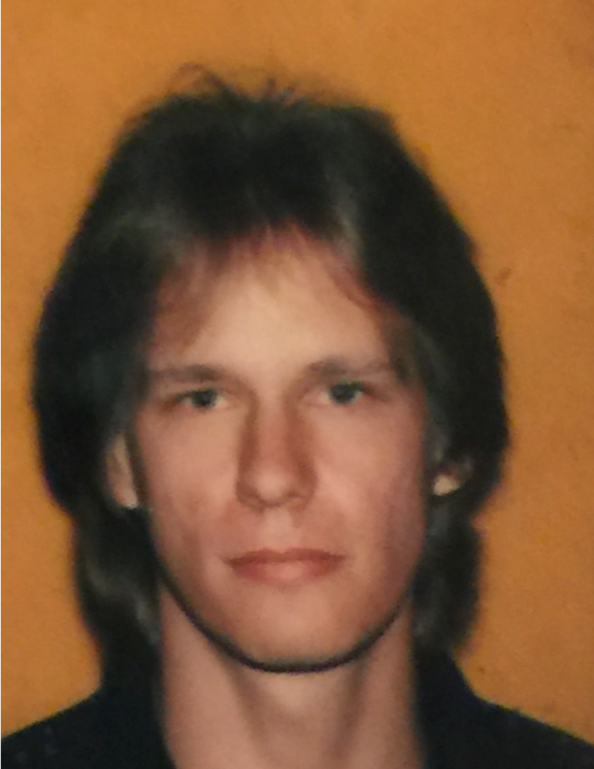
Sociologists and psychologists could probably weigh in and explain, but even some of them thought mullets were good ideas.
After all, who’s not down for some business in front and a party in back?
Certainly, I was.
Maybe the birds had it right. The safety of the flock virtually guarantees that Bill the Cardinal can’t be held responsible when Suzy the Gull started it.
And who can tell? There are millions of goddamned birds.
You can’t be mad with the CIO as he’s only following the algorithm.
Both the owners and the players are trying to save baseball.
Haircuts are a form of personal expression.
Corporations have algorithms. Unions have themes. People have trends.
And the results remain, ownerless and silent.
Who the fuck knows why the birds did what they did, but I’ve never trusted a bird since, and that was only a movie.
I’d write more, but I’m getting a little shaggy, and I have a haircut appointment.
I miss my mullet.